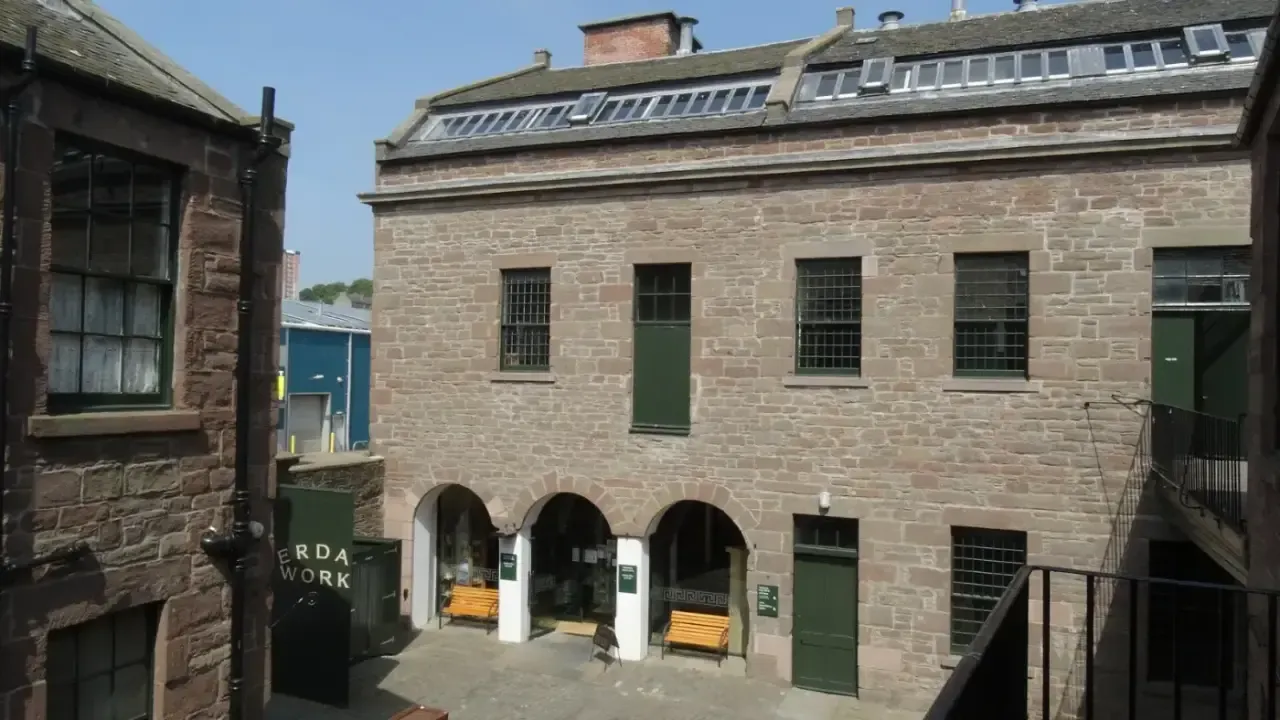
For much of the nineteenth and twentieth centuries, one word summed up Dundee: jute. The city was known around the world as Juteopolis, the jute city.
Linen first, then jute
Jute is a coarse fibre grown on the Indian subcontinent. On its own, however, it is hard to spin by machine. Dundee did not start with it. Instead, the town’s first textile boom was in linen, made from flax. By the 1850s Dundee was the UK’s leading producer of coarse linen cloth, including canvas for the navy. That expertise in preparing, spinning and selling cloth eased the move to jute.
Did whale oil make the difference?
The usual story is that Dundee’s spinners softened jute with whale oil from the town’s own whaling fleet. That, so the story goes, is why the industry took root there. Recent research questions how much that mattered. The Triumph of Textiles (2024) points out that many Dundee firms used jute for rugs and carpets, where the smell of whale oil would hardly have been welcome.
Juteopolis: the boom years
Jute boomed in the 1850s, 1860s and 1870s, driven largely by wartime demand for sacking and other cloth, including during the American Civil War. Mills and their tall chimneys spread across the city, and Dundee became Juteopolis.
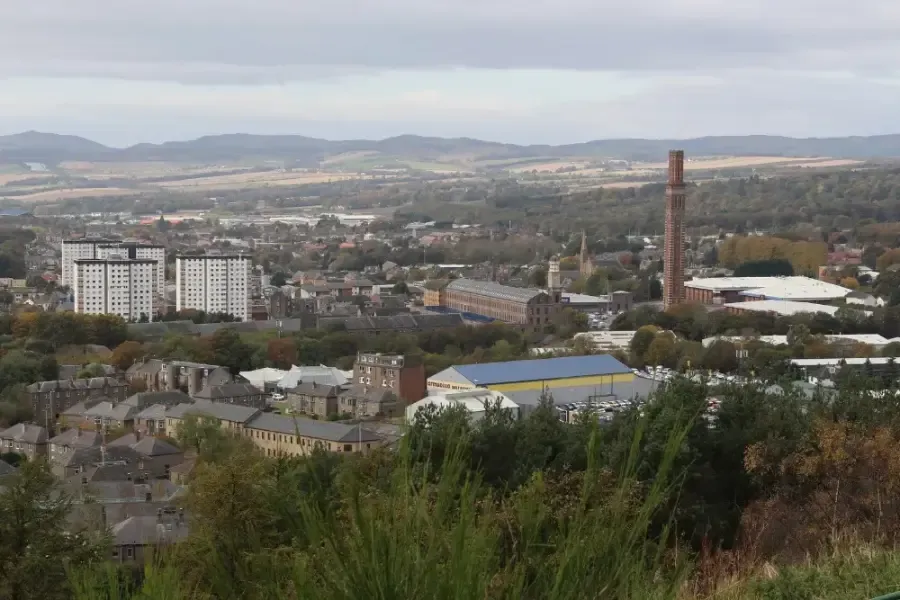
Cox’s Stack, the chimney of the former Camperdown Works in Lochee, seen from Dundee Law. Photo: Graeme Yuill, via Wikimedia Commons, CC BY-SA 2.0.
A workforce of women
Jute employed an unusually high proportion of women. By 1911 they made up around three-quarters of the jute workforce, and Dundee’s mill girls became part of the city’s identity. Conditions were often hard, with long hours, low pay and crowded housing, although historians now stress that much of what has been written about this relates to the later nineteenth century.
Decline and the last mill
From the First World War onwards, it became cheaper to process jute in India itself. As a result, Dundee’s industry slowly shrank. The last jute cargo arrived in the city in October 1998, the city’s last mill closed that year, and spinning at Taybank finally ended in March 1999.
Where to see it now
Verdant Works, a former jute mill run by Dundee Heritage Trust, is now a museum. It tells the story of the industry and the people who worked in it.
Further reading
Chris Whatley and Jim Tomlinson’s The Triumph of Textiles: Industrial Dundee, c. 1700–1918 (Edinburgh University Press, 2024) takes a fresh look at the city’s textile industry, its industrialists and its workforce. For the twentieth century, see Jute No More: Transforming Dundee, which he edited with Jim Tomlinson.
Sources
- Wikipedia: History of Dundee (opens in a new tab)
- University of Dundee press release on the jute industry (2008) (opens in a new tab)
- The Courier: the end of Dundee’s jute industry in 1998 (opens in a new tab)
- Undiscovered Scotland: Verdant Works (opens in a new tab)
- Wikipedia: Camperdown Works (Cox’s Stack) (opens in a new tab)
- Chris Whatley: The Triumph of Textiles, re-imagining industrial Dundee (this site)