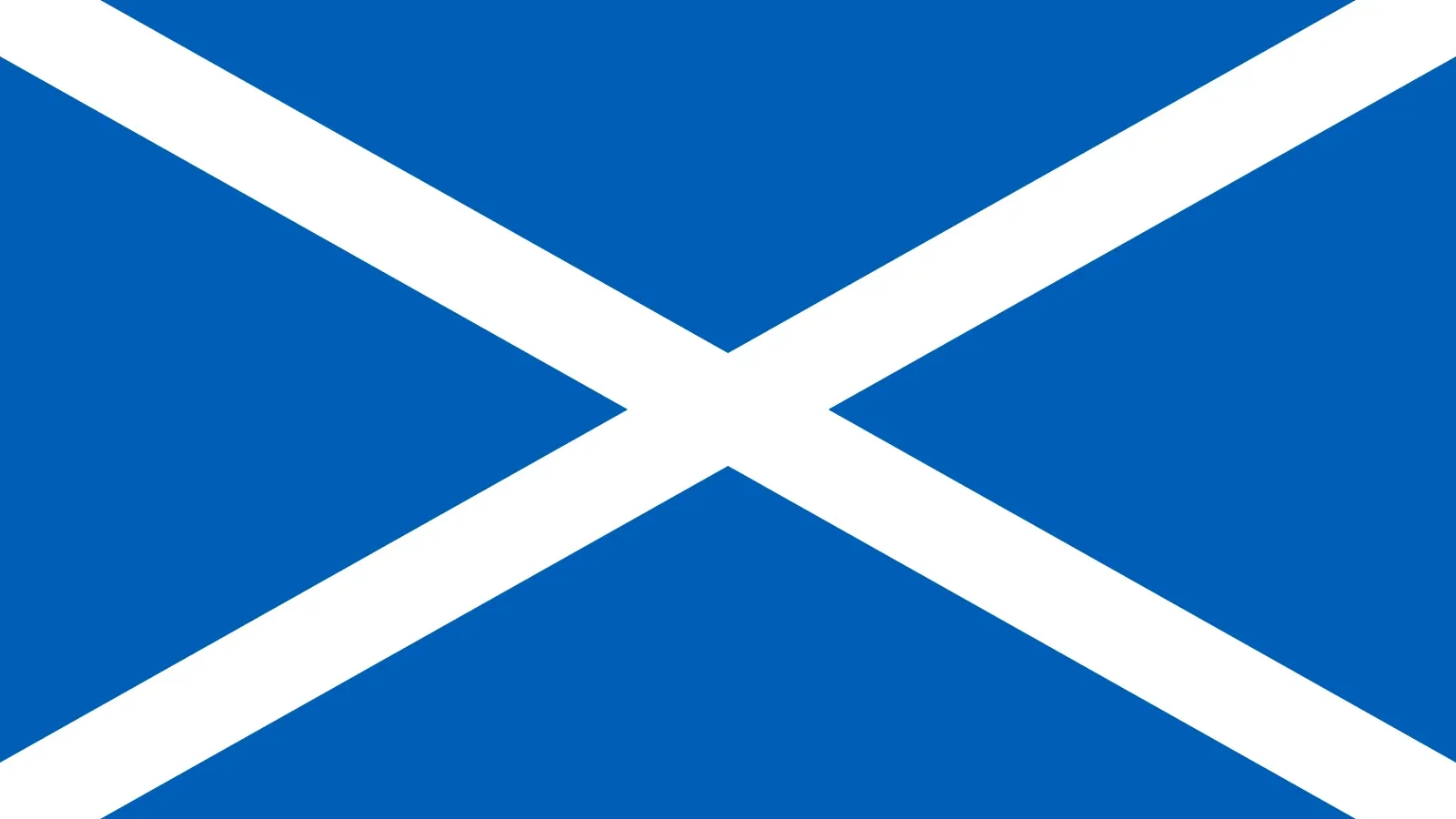
This year St Andrew’s Day falls on Monday 30 November. It is Scotland’s national day, and since 2007 it has also been a Scottish bank holiday. Here is a short guide to the saint, his flag and the day itself.
Who was St Andrew?
Andrew was a fisherman from Galilee and one of the first disciples of Jesus. He was the brother of Simon Peter. Christian tradition says he died in Greece on a cross shaped like an X. He is said to have asked for that shape because he felt unworthy to die as Jesus had. His feast day is 30 November. Scotland is not alone in claiming him. Greece, Romania, Russia and Ukraine also count him as a patron saint.
How Andrew became Scotland’s patron saint
How a Galilean fisherman came to stand for Scotland is a story of relics and legend. According to tradition, bones said to be Andrew’s reached the east coast of Fife in the eighth century. They came to the place now called St Andrews. Sources tell the journey in different ways. Even so, the town grew into a major centre of pilgrimage, and processions carried the relics through its streets.
By the early fourteenth century the saint and the nation went together. The Declaration of Arbroath of 1320, the Scottish barons’ letter to Pope John XXII, invokes Andrew as the kingdom’s patron. Historians date his place as patron saint to different points before that. In other words, the bond grew gradually rather than on one day.
The saltire legend
The story of the flag is a legend, and is best told as one. In the ninth century, it says, a Pictish king called Angus (Óengus) faced a larger army near Athelstaneford in East Lothian. Before the battle he saw a white X-shaped cross against a blue sky. He took it as a sign, won the battle, and vowed to make Andrew his kingdom’s patron. VisitScotland dates the battle to AD 832, while other tellings vary in the details of who fought whom.
Whatever its origins, the white saltire on blue became Scotland’s flag. It is often described as one of the oldest national flags in Europe still in use. Its use by Scottish soldiers goes back at least to 1385.
St Andrew’s Day as a holiday
The Scottish Parliament passed the St Andrew’s Day Bank Holiday (Scotland) Act on 29 November 2006. It became law on 15 January 2007. The Act added 30 November to Scotland’s bank holidays. When that date falls on a weekend, the holiday moves to the following Monday. In 2026 the day itself is a Monday, so nothing moves.
A bank holiday does not mean everyone gets the day off, however. The explanatory notes to the Act say bank holidays do not oblige banks or other employers to close. Time off depends on each person’s contract. In practice many schools close, while plenty of businesses stay open.
How the day is marked
Today people often mark the day with ceilidhs, concerts and saltires on public buildings. Scots abroad have long marked it too. Scottish emigrants formed St Andrew’s societies in North America in the eighteenth century, beginning in Charleston, South Carolina, in 1729.
Further reading
What it means to be Scottish inside a union with England is a theme running through much of Chris Whatley’s work. It runs through The Scots and the Union: Then and Now. It is also the subject of his recent chapter on Scotland’s “frustrated nationalism”, one of his selected papers. You can also find his upcoming talks and events.
Sources
- legislation.gov.uk: St Andrew’s Day Bank Holiday (Scotland) Act 2007, explanatory notes (opens in a new tab)
- VisitScotland: Scottish culture and history (the saltire) (opens in a new tab)
- History Hit: 10 facts about Saint Andrew (opens in a new tab)
- Time and Date: St Andrew’s Day (opens in a new tab)
- Scran blog (Glow Scotland): Saint Andrew, patron saint of Scotland (opens in a new tab)