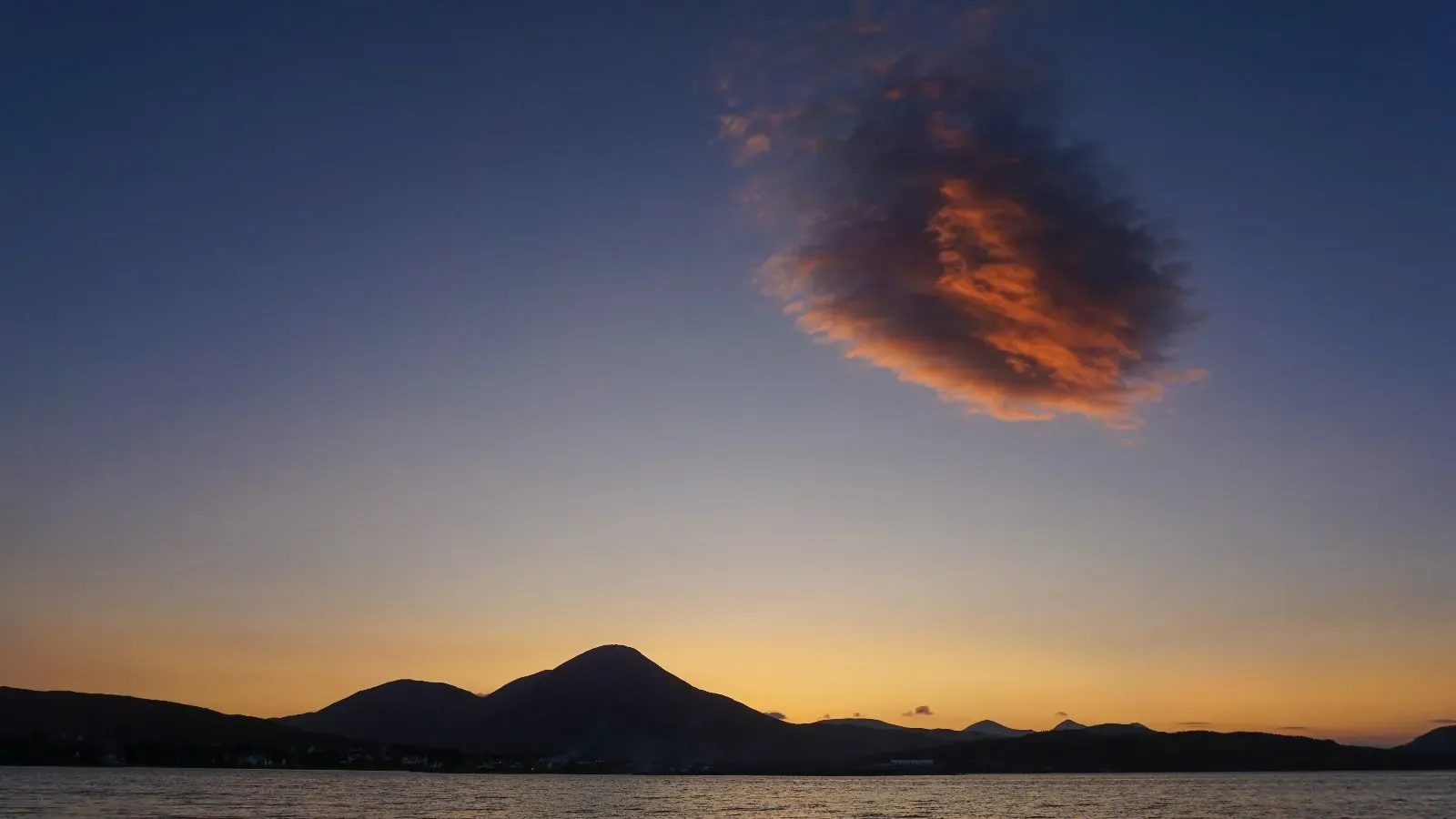
Pabay is easy to miss. It sits low in the Inner Sound, about two and a half miles (4 km) off Broadford on the east side of Skye, with Scalpay to its west and Longay to its north. From the shore it looks like a thin green line on the sea. Yet this small island has a long and surprisingly rich history, from early Christian priests to Victorian geologists and a family who made it home in the twentieth century.
Where is Pabay?
The island is roughly diamond-shaped and almost flat. Its highest point is only about 28 metres above the sea, and low cliffs line its northern and eastern shores. It covers around 360 acres, and at low tide the reefs around it nearly double the area of dry ground. One farmhouse stands on the west side. Today the island has no permanent population and is privately owned. Its owners keep a website about Pabay (opens in a new tab), with more on its wildlife and history.
What does the name Pabay mean?
The name comes from Old Norse papey, the island of the papar, or priests. In Gaelic it is Pabaigh. Norse settlers gave the name to several islands in the Hebrides and Northern Isles where they found Christian holy men before them, which is why there is more than one Pabay in Scotland.
On this Pabay the foundations of a small chapel survive, about 21 feet long, with a burial ground beside it. Its dedication is unknown, and it is usually dated to the thirteenth century. People were here long before that, however. Survey work along the coast has found shell midden and stone tools at two sites, which may go back to the Mesolithic, when Skye’s first hunter-gatherers moved along these shores.
Pabay’s place in the written record
Pabay appears on Blaeu’s map of 1654. A century earlier, in 1549, Dean Donald Monro described it as about a mile long, wooded, and a hiding place for thieves, belonging to the Mackinnons. Later the writer Martin Martin praised its good pasture and its lobsters. In 1841 the census found 21 people living on the island, its highest recorded number. By 1911 there were only five.
Skye’s Jurassic island
Pabay matters to geologists out of all proportion to its size. Its shores are made of Jurassic limestone and shale laid down about 190 million years ago, packed with fossil shells and ammonites. Geologists named this layer of rock the Pabba Shales after the island. Much later, around 60 million years ago, volcanic dykes cut through these beds as the Atlantic opened, and they help protect the island from the sea.
Early nineteenth-century geologists came to Pabay because its fossils helped them read the age and order of the rocks. Hugh Miller landed here in 1844 on the small yacht Betsey, and Archibald Geikie followed. How these visitors made Pabay a small landmark in the history of geology is the subject of Chris Whatley’s article ‘Pabay: Skye’s Jurassic Island’ (opens in a new tab) in History Scotland (2020).
Island life and island stamps
In 1950 Len and Margaret Whatley left the Midlands for Pabay, which had been uncultivated for many years. They farmed, kept poultry, gathered shellfish, welcomed summer visitors and raised a growing family there until 1970. It was hard going, and the island never made them a profit.
The post office would deliver only once a week, so the family carried the island’s mail to Broadford in their own boat. From 1962 they issued local carriage labels for that service, marked “Isle of Pabay”. These were not official Royal Mail stamps, but collectors soon sought them out. Later owners kept the tradition going after 1971, with sets showing birds, seaweeds and Pabay’s own fossil shells.
The book: Pabay: An Island Odyssey
Chris Whatley is Len and Margaret Whatley’s nephew. He knew the island from childhood visits, and he tells its story in Pabay: An Island Odyssey (Birlinn, 2019). The book draws on archives, oral interviews, memory and personal experience, and follows the island from its first holy men and geologists to the trials and joys of family life there in the 1950s and 1960s. The West Highland Free Press called it one of the finest Highland books of the century so far.
You can watch Chris talking about the book in a conversation recorded at Wigtown, and find more recordings on the talks and media page. If your society or book group would like a talk on Pabay or island history, you can contact Chris.
Sources
- Wikipedia: Pabay (opens in a new tab)
- Pabay.org: history of the island (opens in a new tab)
- Paleophilatelie.eu: Pabay Island local stamps (opens in a new tab)
- The Scotsman: When a lonely island called a family to the Hebrides (opens in a new tab)
- Sunday Post: the couple who swapped the Midlands for an island off Skye (opens in a new tab)
- University of Dundee: C. A. Whatley, ‘Pabay: Skye’s Jurassic Island’, History Scotland 20:2 (2020) (opens in a new tab)